
Painting Industrial Chimneys Using Rope Access: How It Works and How Much It Costs
An industrial chimney is a specific type of structure. It stands for years, looks the same regardless of the season, and it is easy to forget that it requires regular maintenance. The problem becomes visible when drone photos show a flaking coating, when an inspector points out defects in the marking, or when an expert assessment reveals progressing corrosion of the steel sheet and concrete. At that point, it is more expensive than it could have been. A chimney in poor technical condition is not only an aesthetic problem. It is a failure risk, an operator’s liability, and in many cases a formal requirement related to technical supervision.
This article explains how work on a chimney differs from standard work at height, what alternative access methods look like, and how much an anti-corrosion painting project carried out using rope access may cost.
The Specific Nature of Chimney Work: Vibration, Temperature, and Limited Accessibility
Industrial chimneys, both steel and reinforced concrete, are structures that present several challenges to the contractor at the same time.
Vibration: a chimney operates in a constant field of vibration generated by exhaust gases, wind, and boiler room operation. During operation, amplitudes can be significant, especially in tall, slender steel chimneys. A technician working on ropes must be able to work in unstable conditions and be equipped with a fall protection system that takes the dynamics of the structure into account.
Temperature: the surface of an operating chimney is hot. The external temperature of the shell depends on the flue gas temperature and the insulation of the structure, but in many cases painting can only be carried out when the boiler is shut down or within a system that controls the substrate temperature. Epoxy and polyurethane paints have requirements regarding substrate temperature during application. Typically, the minimum temperature is +5°C, and the substrate must not be hot. Work on an active chimney is possible only with selected materials designed for elevated temperatures.
External accessibility: a chimney is usually located in a place that limits the use of ground-based equipment. Buildings, installations, fences, and other technical structures may be located around it. The typical radial reach of a telescopic lift often does not cover the full height of the chimney, especially for chimneys above 40–50 metres.
Shape and geometry: a chimney has a cylindrical or conical shape. Painting requires systematic coverage of the entire surface without omitting sections that are difficult to access from a single point. Rope access methodology allows the technician to work at different levels, moving sector by sector around the circumference.
Comparison of Access Methods: Scaffolding, Crane, and Rope Access
The choice of access method for a chimney is a decision that directly affects the duration and cost of the project.
Vertical scaffolding: theoretically possible, but rarely practical for tall chimneys. Scaffolding surrounding the chimney at full height requires a huge amount of material, long assembly and dismantling times, significant rental and insurance costs, and offers limited possibilities when the chimney has an irregular shape or is located close to other structures. For chimneys above 30 metres, the cost and time required for scaffolding often exceed the cost of the painting work itself.
Telescopic crane or boom lift: a good solution for work on lower chimney sections or for spot repairs. The limitation is that the maximum working height of typical boom lifts is 40–50 metres, and with slender chimneys it is necessary to maintain an appropriate distance from the shaft, which reduces arm reach. For chimneys above 50–60 metres, basket access is impossible or uneconomical because it requires specialist equipment with a very large reach.
Rope access: technicians descend from the top of the chimney, working in sections at each level. This method does not require scaffolding, is independent of the geometry of the area around the chimney, and scales to any height. Mobilization time is short, and the work duration is comparable to or shorter than other methods because there are no scaffolding assembly and dismantling stages.
For chimneys above 30–40 metres, rope access is usually the optimal method in terms of both cost and time.
Stages of Anti-Corrosion Chimney Painting
A chimney painting project consists of three main stages carried out sequentially.
Pressure washing: the first stage involves cleaning the surface of dust, bird droppings, loose deposits, and old, non-adherent coating layers. High-pressure or steam washing makes it possible to assess the actual condition of the coating and substrate, which is often hidden by dirt. The washing result is documented photographically before and after.
Surface preparation: after the surface has dried, the corrosion condition and adhesion of the existing coating are assessed. Areas with corroded steel are cleaned to the required grade, such as ISO 8501 St 2 or St 3 for manual and mechanical cleaning, or Sa grades for blasting. They are then degreased and primed with a primer compatible with the coating system. For reinforced concrete chimneys, the condition of the concrete, carbonation, and any cracks are assessed.
Layered painting: the paint system is selected according to the chimney’s specific characteristics: material, whether steel or concrete; corrosivity category, usually C4 or C5 for industrial chimneys; operating temperature; and required durability. Two- or three-layer systems with an epoxy primer and a chemical-resistant topcoat are typically used. For chimneys operating at elevated temperatures, heat-resistant silicone or rubber-based paints are used.
What Determines the Price and Duration of the Project?
The cost of painting a chimney using rope access depends on several factors that must be assessed before a quotation is prepared.
Height and surface area: a larger surface means more working time and more material, but the unit cost may be lower for large chimneys because of the organizational scale effect.
Substrate condition: a chimney in poor corrosion condition requires more intensive preparation, which extends the project and increases the consumption of abrasive and primer materials.
Paint system: heat-resistant, chemical-resistant, and specialist paints are more expensive than standard epoxy systems. The choice of system must take operating conditions into account.
Chimney accessibility: proximity to other structures, installations, or zone restrictions may require additional protection or a modified methodology.
Obstacle marking: if the chimney requires obstacle marking stripes in accordance with aviation regulations, this is a separate cost item.
The project duration for a typical industrial chimney up to 50 metres high is usually from several to several dozen working days, depending on the condition and scope. The work schedule is limited by weather conditions, as paint application requires appropriate temperature and relative air humidity.
If you have a chimney that requires painting, inspection, or technical condition assessment, ask for a quotation. The condition assessment of the chimney can be carried out as a separate service, independently of the decision to paint. It is better to know what is needed than to plan blindly.
Author
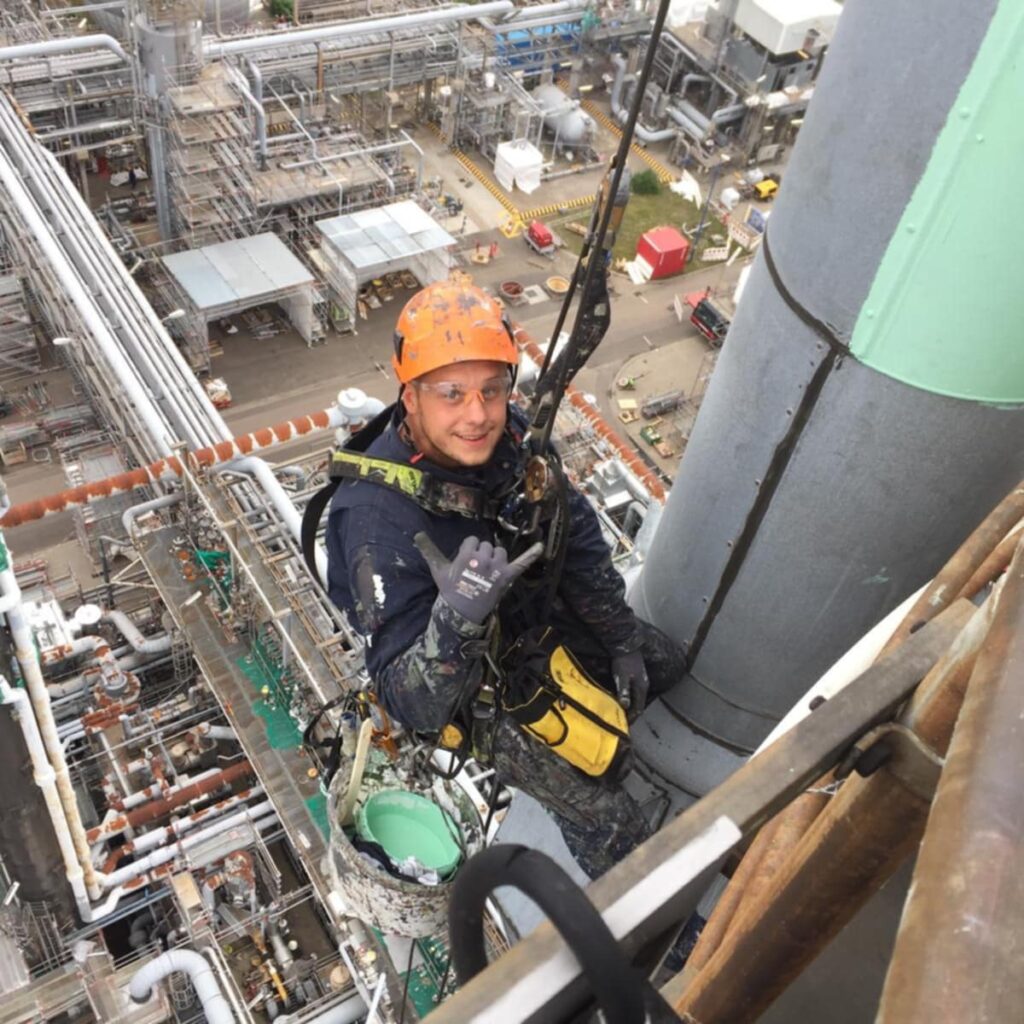
Piotr Lankiewicz
Specialist in height work and rope access techniques. Owner of a company providing services in the most inaccessible locations nationwide. He prioritizes punctuality, strict health and safety standards, and solutions that save time and costs where the use of heavy machinery is impractical or not cost-effective.