
Anti-Corrosion Painting of Steel Structures: Maintenance Cycle and Real Costs
Steel corrosion looks like a problem that can be postponed. A little rust on a roof beam, flaking coating on structural columns, rusty streaks on a façade – none of this stops the hall from operating today. The problem is that corrosion works continuously, whether you are watching it or not. And when it is visible to the naked eye, it means that several to over a dozen percent of the element’s cross-section may already have been destroyed. The cost of repair increases geometrically. The cost of replacing a corroded structure is many times higher than the cost of regular maintenance that could have been planned three seasons earlier.
This article explains how corrosion works from the strategic perspective of a facility manager, what ISO 12944 says about maintenance cycles, and what the real economics of anti-corrosion painting using rope access look like.
Why Steel Corrosion Is a Financial Problem, Not Just an Aesthetic One
Rust on a steel structure is not a matter of appearance. It is a loss of material that changes the load-bearing parameters of the element. Steel loses cross-section, its bending and compression strength decreases, and the risk of stability loss increases. Depending on the corrosivity category of the environment and the thickness of the original protection, unprotected steel can lose from several dozen micrometres to several millimetres of cross-section per year.
The financial consequences occur in three stages.
First threshold: surface corrosion. The coating is damaged, but the metal has not yet been seriously affected. The cost of intervention involves cleaning and repainting. It is relatively low.
Second threshold: pitting corrosion and cross-section loss. An engineering assessment of the structural condition becomes necessary, along with local reinforcement or replacement of elements. The cost increases several times.
Third threshold: advanced corrosion with deformation or loss of load-bearing capacity. This means replacement of entire structural segments, facility downtime, potential insurance issues, and liability exposure. The cost is incomparably higher than the total cost of many years of maintenance inspections.
There is also the issue of legal responsibility. The facility manager is responsible for the technical condition of the structure. If corrosion was visible and neglected, and a failure or accident occurs, the lack of documented maintenance actions becomes a serious burden during the investigation.
ISO 12944: Corrosivity Categories and Recommended Painting Intervals
ISO 12944 is the standard governing the protection of steel structures against corrosion through protective paint systems. It defines five environmental corrosivity categories, from C1 to C5, and one special category, Im, for immersed structures.
C1 – very low: heated interiors with low humidity. Typical examples include offices, shops, and schools.
C2 – low: atmospheres with low pollution. Rural areas and unheated buildings where condensation may occur.
C3 – medium: urban and industrial environments with moderate sulphur dioxide pollution. Examples include food production halls, laundries, and breweries.
C4 – high: chemical plants, swimming pools, shipyards, and coastal areas. This also includes halls with intensive chemical production.
C5 – very high: industrial environments with high salinity or heavy pollution. Coastal and offshore installations.
For each corrosivity category, the standard defines the expected time to first maintenance, referred to as durability, in three categories: low (L: up to 7 years), medium (M: 7–15 years), and high (H: over 15 years). The selection of a paint system depends on the corrosivity category and the expected durability of the coating.
In practical industrial facility management, this means that a hall in category C3 with a medium-durability paint system should undergo inspection and possible maintenance in a 7–15-year cycle. However, this is the maximum cycle. If the coating is damaged by impacts, vibrations, or temperature changes, intervention should take place sooner.
What Rope Access Painting Looks Like
Anti-corrosion painting of steel structures using rope access consists of three main stages, which must be carried out in the correct order. Shortening or skipping any of them reduces the durability of the new coating.
Surface preparation: this is the most important stage and determines the quality of the entire coating system. It includes removing old, non-adherent paint layers, manually, mechanically, or by abrasive methods; removing corrosion products to the cleanliness grade specified in ISO 8501; degreasing; and cleaning the surface. Poorly prepared substrate is the main cause of premature detachment of a new coating. The cleaning method is selected according to the substrate condition and working conditions. When working at height, mechanical-abrasive cleaning is often preferred over sandblasting because it allows better dust control.
Coating application: the paint system is selected according to the corrosivity category and expected durability. A standard system for C3 industrial facilities includes an epoxy primer and a polyurethane or chlorinated rubber topcoat. Coating application from rope access is carried out by brush, roller, or spray method, with appropriate environmental protection. The technician works in sections, ensuring the required wet and dry film thicknesses in accordance with the product technical data sheet.
Quality control: after each layer has dried, the dry film thickness is measured using a magnetic gauge. The results are documented in a protocol, which becomes part of the facility’s technical documentation. Coating thickness control is the basis for future assessments of anti-corrosion protection and for planning the next maintenance cycle.
Cost Ranges Versus the Cost of Replacing a Corroded Structure
The cost of anti-corrosion painting using rope access depends on several variables: the surface area to be painted, the degree of corrosion and required surface preparation, the class of paint system, accessibility and height of the elements, and weather and seasonal conditions. Because of these variables, giving specific prices is not meaningful. Price ranges for similar facilities may differ severalfold depending on the current condition and standard-related requirements.
What matters, however, is the comparison with the alternative. Replacing a corroded load-bearing beam or truss is not only the cost of material and welding work. It also includes design and structural calculations, dismantling the existing element, temporary reinforcement, interruption of facility operations, new installation, and painting from scratch. There may also be administrative decision costs if the change concerns an element covered by a building permit.
Regular inspection of coating condition every few years and maintenance every 7–15 years, in accordance with ISO 12944, is always cheaper than replacement. The difference between the proactive and reactive scenarios is usually a multiple of the maintenance cost.
If you do not know the condition of the anti-corrosion coating on your structures, or if a long time has passed since the last maintenance, order a condition assessment. We can carry out an inspection, determine the corrosivity category, and assess whether the coating requires intervention now or only in a few seasons. This is information that allows you to plan instead of react.
Author
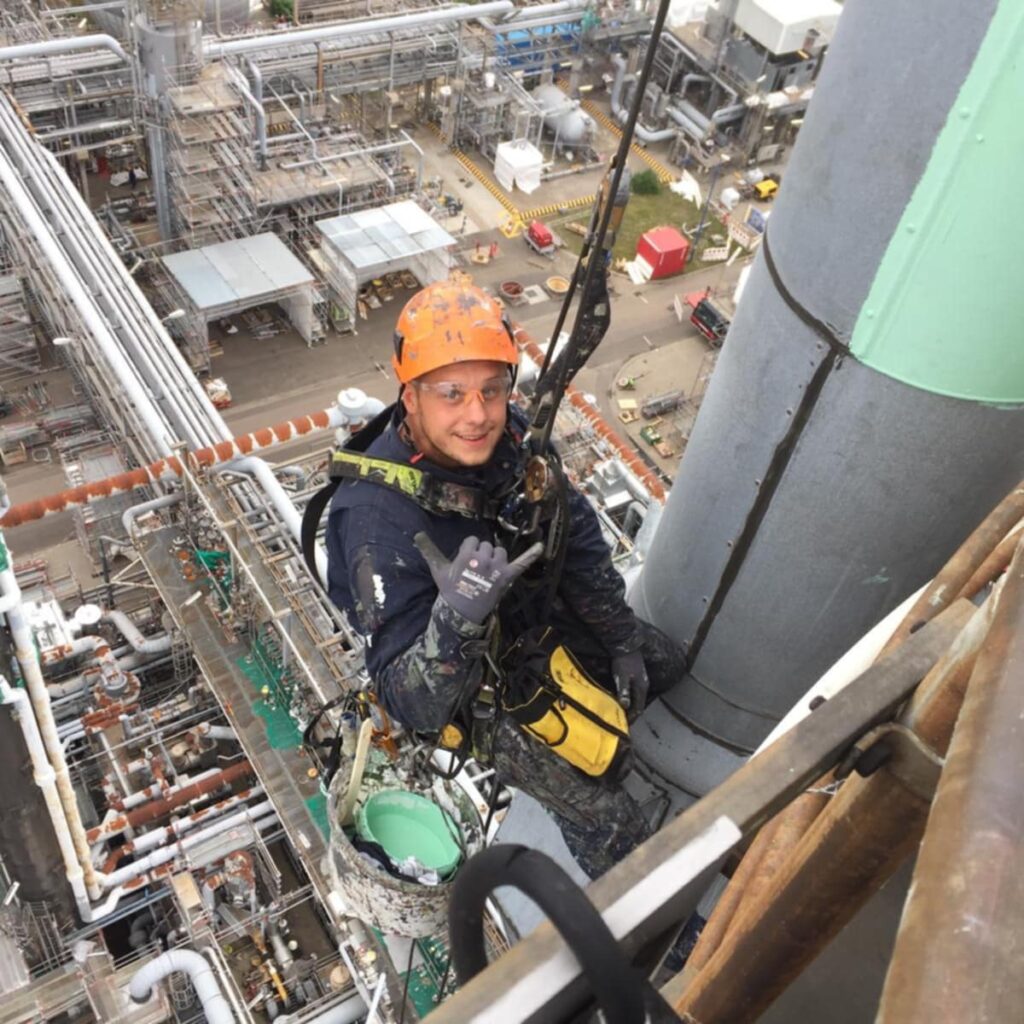
Piotr Lankiewicz
Specialist in height work and rope access techniques. Owner of a company providing services in the most inaccessible locations nationwide. He prioritizes punctuality, strict health and safety standards, and solutions that save time and costs where the use of heavy machinery is impractical or not cost-effective.