Production downtime costs and industrial machine maintenance – how to manage the risk
Postponing anti-corrosion work usually looks reasonable only on a spreadsheet showing the current budget. Once degradation spreads to further elements, the company pays not just for painting, but also for a longer equipment shutdown, additional protective measures and repairs.
When planning maintenance without an uncontrolled shutdown, the main question is whether the cost of a scheduled service window is lower than the risk of an emergency stop and urgent contractor mobilization. In a plant running shift work, renovation cannot be assessed on the painting price alone. What also matters is lost production, the time needed to secure the line, and whether the equipment can be handed back in stages. The decision is therefore best based on data from the site itself, not on a simplified price list, a single photo, or an assumption carried over from another project.
Why downtime cost matters more than the painting price alone
The real cost of renovation is made up of lost production, changes to the shift schedule, materials logistics, crew readiness and the risk of missing deadlines owed to the plant’s own customers. It is worth asking the contractor to describe the method, how surfaces will be protected, how many people will be involved, what access is needed, who is responsible for preparing the site, and what the acceptance criteria are. The answers to these questions should be written into the offer or the agreement record – a general assurance that the team will manage does not replace a plan.
What also matters is the value of production lost per hour of shutdown, along with the time needed to park the crane and prepare the lockouts. Only bringing these figures together shows whether the chosen method can actually be carried out in the available time, without shifting undescribed obligations onto the client.
Rope Tech prepares surfaces mechanically as standard – similar to the approach used in regular cleaning of industrial facilities and structures – which makes it easier to control dust and carry out the work in stages inside an operating plant. The maintenance plan should be built around the plant’s calendar, not the other way round. It is best to record these arrangements on a zone map or in a short protocol, so that the crew and the person accepting the work use the same breakdown of the site.
Prevention instead of intervention
A preventive approach means removing corrosion locally and rebuilding the coating before the damage spreads to a larger area or to elements that are hard to repair. These points need to be translated into specific questions asked during the site visit and the quotation stage. The contractor should state which information is already certain, what cannot be assessed from photos, and which assumptions may only change the scope of work once the team is on site. This way the client is not comparing offers that look similar but in fact cover different work.
The real scope of preventive work only becomes clear on the specific site. What matters most is the availability of night and weekend service windows and the number of zones that can be closed within a single time window, since these factors affect the number of work stations, how they are protected, and the order in which individual zones are closed.
Where the service window is very short, sandblasting or hydro-blasting is sometimes considered as a supplement to the schedule, although it remains a supporting method rather than Rope Tech’s core offer. For each service window, the plan defines the surface area that can be prepared, painted and accepted without leaving an open, unfinished stage. If part of the data cannot be confirmed from photos, it is more honest to mark that scope as conditional than to write down a single figure that later needs correcting.
Preventive work can naturally be combined with the high-access painting and anti-corrosion protection service for industrial machines and structures. The link leads to an overview of what Rope Tech offers, while the details for a specific machine still require a separate quotation and an assessment of the conditions on site.
How to split the work into stages
The split is based on the equipment’s zones, short night windows, weekends, and work sections that can be secured and accepted without shutting down the whole hall. If this area is overlooked during planning, work can stall not because of the technology itself, but because of missing access, an unprepared zone, or a conflict with the plant’s operations. The schedule should cover preparation, the actual work, technological breaks, acceptance, and the possibility of safely withdrawing the team.
Splitting the work into stages is not enough on its own without describing the consequences. The offer should explain how long it takes to park the crane and prepare the lockouts, as well as what happens if a stage is interrupted before the next coating layer is applied. Separating these elements makes it easier to compare contractors and to distinguish the fixed scope from work that can only be confirmed once real access has been obtained.
The most commonly used paint system is an epoxy primer with a polyurethane topcoat, unless the client specifies its own coating system. For short shutdowns, smaller, complete sectors work better than starting work across the whole structure at once. In practice, the decision should also account for the moment at which a stage can be safely stopped, when weather, production, or the condition of the surface no longer allow work to continue.
Working on an active production line
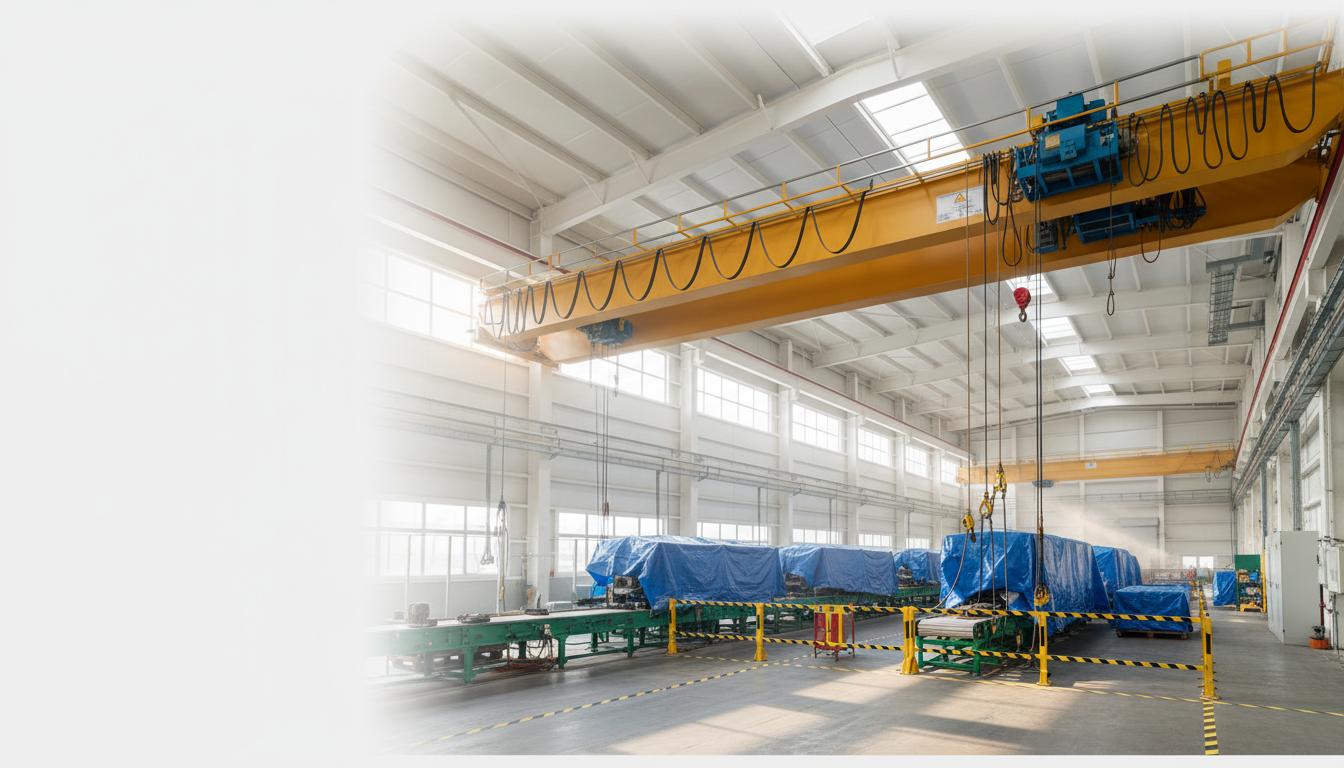
In practice this means parking the crane, covering it with tarpaulins, cordoning off the zone, supervising from the ground, and agreeing in advance on how to communicate with the operator and production staff. The most common mistake is choosing a solution that looks good on paper but does not match the actual conditions on site. The result is additional mobilizations, longer shutdowns, materials being changed mid-work, or reduced quality of surface preparation.
In this area, predictability comes above all from data on how many zones can be closed within a single window and on the value of production lost per hour of shutdown. Missing even one of these elements usually leads to an extra mobilization, a schedule change, or a reduced scope once work has already started.
Work can be planned for nights or weekends, when the equipment is parked and the zone has been formally handed over to the crew. A simple sheet covering shutdown time, mobilization, protective measures and expected scope of work is useful for comparing options. A quotation is clearer when it separates the actual work from mobilization, protective measures, waiting for access, and work carried out by other parties.
What a business continuity plan should include
A good plan covers a primary and a backup option, dependence on weather or ventilation, coating drying time, readiness to stop the work, and clear criteria for restarting the equipment.
Such a plan should lead to concrete operational arrangements, not just to naming a technology. It is necessary to establish the consequences of stopping a stage before the next coating layer is applied, verify the availability of night and weekend service windows, and record who approves a change of scope if conditions found on site differ from earlier assumptions.
Above active production lines, tarpaulins are used, and a worker on the ground supervises the zone and communication with the team working at height. A business continuity plan does not require artificial failure forecasts, but it does show what cost arises independent of the painting labor itself. Acceptance is best planned before the prepared surface is covered or access is dismantled, because a later assessment may end up relying on photographs alone.
How to justify the budget to management
Budget arguments should weigh the cost of planned maintenance against the risk of failure, a larger repair, lost equipment availability, and an unplanned stop to the production process.
Before the budget is approved, it is worth checking the value of production lost per hour of shutdown, along with the time needed to park the crane and prepare the lockouts. Both factors affect safety, working time, and the ability to hand over a stage before a change of position or the equipment being restarted.
An operator holding UDT crane qualifications can reposition the equipment in line with the agreed work organization. The greatest risk comes from a schedule that assumes full equipment availability, while production may in fact reclaim it earlier than planned. Assumptions should state not only what will be done, but also the boundaries of responsibility and the procedure for approving additional work.
Data needed to prepare a quotation
A quotation for planning maintenance without an uncontrolled shutdown should be based on material that allows access, scope of work and organizational constraints on site to be assessed. The most useful approach is data gathered in a single message or form, supplemented with photos of the whole facility and of the details in the worst condition.
- Photos of the whole piece of equipment and of the details in the worst condition.
- Height, geometry, passage widths and access constraints.
- Whether the equipment can be parked, and which night or weekend windows are available.
- The layout of production lines and how they are protected with tarpaulins.
- The required paint system or the specification indicated by the client.
- The decision-maker on the plant’s side and the acceptance rules for individual stages.
If the value of lost production or the length of the available service window is not known at the offer stage, the calculation should state the assumption used and how billing would work if the shutdown turned out to be longer. This way the client compares variants of the same risk, rather than different planning and acceptance standards.
Execution process and control points
A good maintenance plan splits the service window into stages that can be closed off without extending the shutdown. The order is not a matter of crew convenience – it determines how much production can be recovered between successive zone closures and whether the surface can be documented before it is covered again.
- Site visit and division of the equipment into clearly defined zones.
- Agreeing on parking, lockouts and communication with the operator or maintenance staff.
- Cordoning off the area, securing the line and assigning ground-level supervision.
- Mechanical removal of corrosion, dust removal and degreasing of the surface.
- Applying the epoxy primer and polyurethane topcoat, or the system specified by the client.
- Accepting the zone before the equipment changes position and production resumes.
The decision-maker on the plant’s side should be available for the acceptance of every closed zone and for every change to a service window. If work reveals a need for tasks outside Rope Tech’s scope, the company can coordinate a subcontractor, but the documentation must clearly separate each participant’s responsibility.
Acceptance and documentation
Acceptance of each closed zone should match the equipment breakdown set out earlier in the service window schedule. Photos of details alone are not enough if they cannot be linked to a specific zone, stage and date. It is worth photographing the surface before preparation, after the stage is finished, and before the equipment is restarted.
- Whether the completed zones match the map and the scope of the offer.
- Documented surface preparation before it is covered with primer.
- Continuity of coverage on edges, welds and underside surfaces.
- Cleanliness of lines, passages and equipment after protective measures are removed.
- A description of areas excluded from the scope and of work carried out by other specialists.
The service window closing protocol should list the zones postponed to a later date and the work carried out by other parties. This record makes it easier to plan the next shutdown, make use of the warranty, and assess how much surface area remains to be protected in the future.
Most common mistakes and risks
The biggest problems in planning maintenance without an uncontrolled shutdown usually come from an incomplete assessment of the site, not from using the wrong tool. The lack of a previously agreed, safe stopping point for the work leads to extra mobilizations and conflict between the crew and the plant. The risks below are worth discussing before the team is mobilized.
- Choosing an access method without first checking the equipment’s blind spots.
- No one available to approve moving or parking the equipment during the work.
- Overlooking grease, dust and other operational contamination before painting.
- Assigning Rope Tech NDT testing or structural repairs that belong to a subcontractor.
- Starting too many zones at once, without the ability to close them within the available time window.
The risks of underestimating downtime are limited by a site visit, a single person coordinating the schedule, and a clearly written contingency plan in the offer. Rope Tech does not carry out NDT testing, welding or work requiring certifications the company does not hold, and coordinating a subcontractor does not mean carrying out their specialized work directly.
Summary
A good decision on planning maintenance without an uncontrolled shutdown combines technology, access, site organization and how the work is accepted. The lowest price is not an advantage if it leaves out preparation, protective measures, or tasks that only come to light once the team is on site.
Before scheduling a service window, it is worth confirming the production data, the order in which zones are closed, who approves changes, and how acceptance will be documented. This approach limits the risk of an extended shutdown and allows the result to be assessed against criteria set in advance, rather than against estimates made at the planning stage.
Author
Piotr Lankiewicz
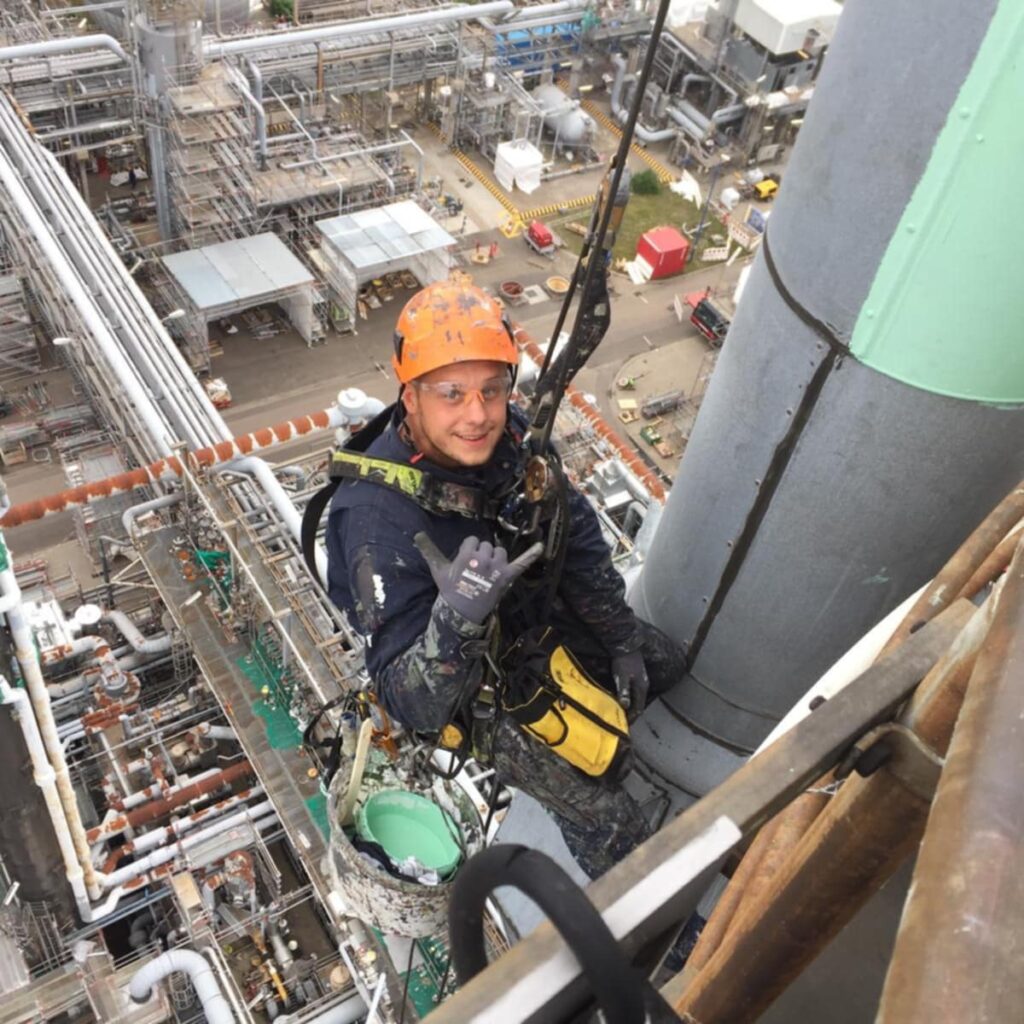
Specialist in height work and rope access techniques. Owner of a company providing services in the most inaccessible locations nationwide. He prioritizes punctuality, strict health and safety standards, and solutions that save time and costs where the use of heavy machinery is impractical or not cost-effective.