Boom lifts for painting industrial machines and equipment – when they pay off, and when they’re a waste of money
Access to a crane, conveyor, gantry or structure above a production line often determines the cost of the entire painting job. A boom lift is often the first idea that comes to mind, but it isn’t always the cheapest or most efficient solution.
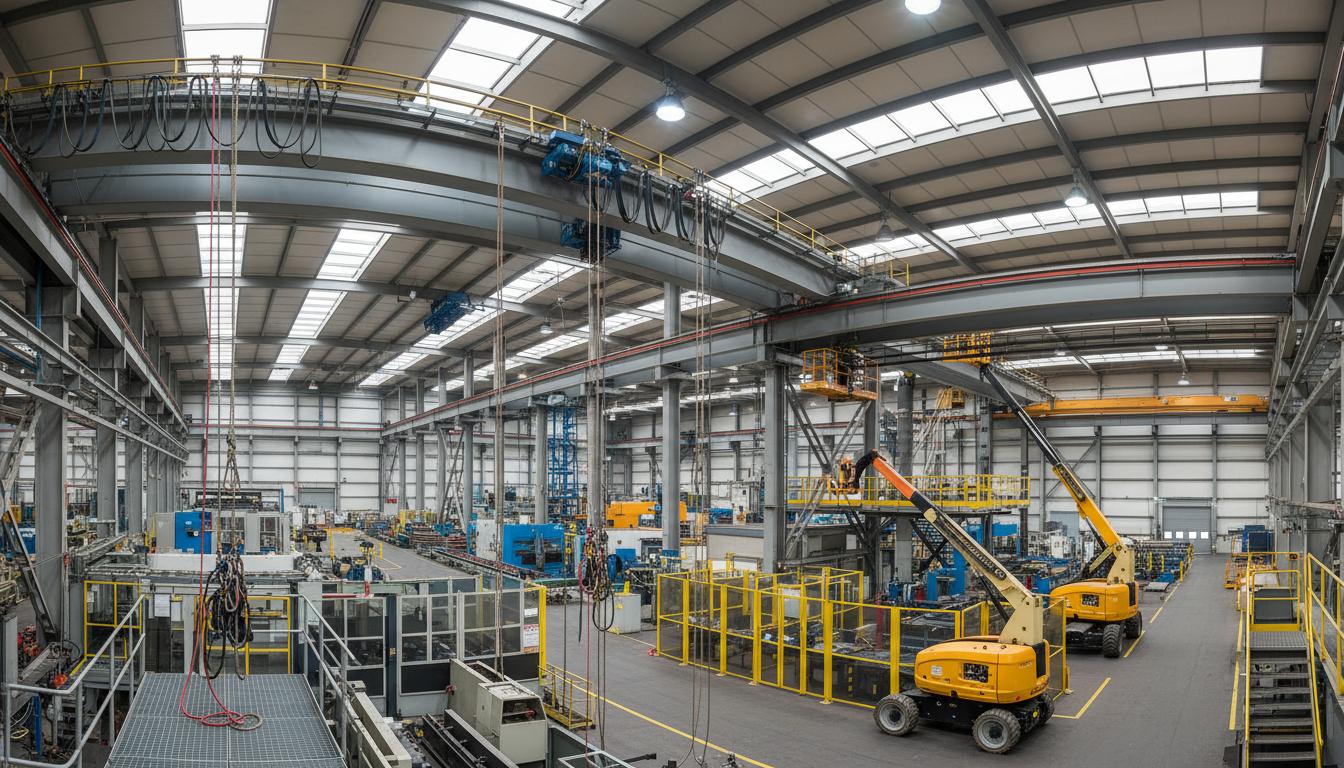
When choosing access to industrial machinery, the key question is whether the lift can actually reach the whole surface of the machine without repeated repositioning and blocking traffic routes. In a hall with an open layout, a boom lift can speed up work on large, flat surfaces. Around cranes, cables, platforms and elements located above the production line, however, some zones may remain outside its safe reach. The decision to use a boom lift should therefore be based on the actual layout of the hall and the geometry of the machine, not on a simplified price list drawn up for a different facility.
Where to start when choosing an access method
The starting point is comparing the geometry of the equipment, the load capacity of the floor, the width of the access routes, the possibility of stopping the machine, collision zones and access to the upper sections of the structure. These elements need to be translated into concrete questions asked during the site visit and quoting stage. The contractor should state which information is already certain, what cannot be assessed from photos, and which assumptions may change the scope of work only after entering the site. This way the client isn’t comparing seemingly similar offers that in reality cover different activities.
Equally important is the load capacity and condition of the floor along the lift’s travel route, and the number of relocations needed to close off one zone. Only once this data is put together can you see whether the chosen access method is feasible within the available time, and without shifting undocumented obligations onto the client.
Rope Tech standardly prepares surfaces mechanically – similar to cleaning hard-to-reach industrial objects and structures – which makes it easier to control dust and carry out work in stages at a running plant. A comparison of access methods should be built on a map of the equipment’s reach – ideally recorded as a zone map or a short protocol, so that the crew and the person accepting the work are working from the same breakdown of the facility.
When a boom lift has the advantage
A boom lift works best where the hall offers large, flat surfaces, stable ground and free access, where the equipment can be left in place for the entire duration of the work, and where there’s no collision with process lines nearby. If this area is overlooked at the planning stage, work can stall not because of the technology itself, but due to lack of access, an unprepared zone, or a conflict with the plant’s operations. The schedule should account for preparation, the actual work, technological breaks, acceptance, and the possibility of safely withdrawing the team.
The real advantage of a boom lift only becomes clear at a specific site. What matters most are the equipment’s working height and side reach, and any collisions with installations, platforms and operating machines, because these are what determine the number of work positions, the method of securing the area, and the order in which individual zones are closed off.
When comparing this with jet-cleaning methods, it’s worth remembering that sandblasting and hydro-blasting fall behind where point access without scaffolding matters – it’s this factor, not the cleaning technique itself, that decides in favor of a boom lift. In practice, surfaces accessible from the basket are marked first, then spots requiring rope access, and finally zones that need to be temporarily taken out of service. If part of the data can’t be confirmed from photos, it’s more honest to mark that scope as conditional than to enter a single figure that later needs correcting.
Boom lift work can naturally be combined with the high-access painting and anti-corrosion protection service for industrial machines and structures. The link leads to a description of what Rope Tech offers, but the details for a specific machine still require a separate quote and an assessment of the conditions on site.
When a boom lift generates cost without value
The situation reverses in tight halls, near overhead installations, crane rails and zones between machines, where the lift has to be repositioned frequently and, in the process, blocks traffic routes. The most common mistake is choosing a solution that looks good on paper but doesn’t match the conditions on site. The result is extra mobilizations, longer production shutdowns, mid-job material changes, or a reduced quality of surface preparation.
Simply stating that access is difficult isn’t enough – the offer should clearly state the number of relocations needed to close off one zone, as well as the cost of transport, the operator and the lift’s downtime. Separating these items this way makes it easier to compare contractors and to distinguish the fixed scope from work that can only be confirmed once actual access to the structure has been established.
The most commonly used paint system is an epoxy primer with a polyurethane topcoat, unless the client specifies their own coating system. Only a concrete plan shows whether a boom lift actually saves time or just adds another costly mobilization. In practice, the decision should also account for the point at which a stage can safely be paused, when weather, production or the surface condition don’t allow work to continue.
Rope access for cranes and machines
Rope access, one of the methods Rope Tech also uses for other work at height, makes it possible to reach nodes, beams, cabins, platforms and elements above an active production line without bringing heavy equipment into the hall. It’s worth asking the contractor to describe the method, how it’s secured, how many people are involved, what access is needed, who is responsible for preparing the site, and the acceptance criteria. The answers to these questions should be in the offer or the agreement protocol – a general assurance that the team will manage doesn’t replace a plan.
In this variant, predictability comes above all from data on collisions with installations, platforms and operating machines, and on the load capacity and condition of the floor along the travel route. Missing even one of these elements usually leads to an extra mobilization, a schedule change, or a reduced scope once work has already begun.
Rope work can be planned for nights or weekends, when the equipment is parked and the zone has been formally handed over to the crew. Before making a decision, it’s worth asking the contractor to specify the number of work positions, the method of securing the ground, and the procedure for changing position. A quote is clearer when it separates the actual task from mobilization, safety measures, waiting for access, and work carried out by other parties.
How Rope Tech organizes work without stopping production
In practice this means night and weekend slots, parking the crane in a designated spot, covering the area above the line with tarpaulins, fencing off the site, and continuous supervision by a worker on the ground.
The choice of work organization should lead to a concrete operational decision, not just naming a technology. It’s necessary to establish the cost of transport, the operator and the lift’s downtime, verify the equipment’s working height and side reach, and record who approves a change in scope if the conditions found on site differ from earlier assumptions.
Above active production lines, tarpaulins are used, and a worker on the ground supervises the zone and communication with the team working at height. An offer that lacks this information doesn’t show the real impact of the lift on production continuity. It’s worth planning the acceptance before the prepared surface is covered or the access equipment is removed, because a later assessment may be limited to photos alone.
What to really compare in the cost estimate
A reliable comparison of offers should include mobilization, transport, the lift operator, repositioning time, zone availability, safety measures, surface preparation, and the actual number of hours worked on the structure.
Before approving the scope, it’s worth checking the load capacity and condition of the floor along the travel route, and the number of relocations needed to close off one zone. These two factors affect safety, working time and the ability to accept a stage before changing position or restarting the facility, all at the same time.
An operator holding the relevant crane certification can reposition the equipment in line with the agreed work organization. The biggest mistake is choosing equipment based solely on the working height stated in a catalog. The assumptions should specify not only what will be done, but also the limits of responsibility and the procedure for approving additional work.
Data needed to prepare a quote
A reliable quote for access to industrial machinery is built on material that allows an assessment of access, scope of work and the organizational constraints on site. The most useful approach is data gathered in a single message or form, supplemented with photos of the whole facility and of the details in the worst condition.
- Photos of the entire piece of equipment and of the details in the worst condition.
- Height, geometry, width of access routes and access constraints.
- The possibility of parking the equipment and available night or weekend windows.
- The layout of production lines and how they’re covered with tarpaulins.
- The required paint system or specification indicated by the client.
- The decision-maker on the plant’s side and the acceptance rules for individual stages.
If the actual reach of the lift relative to the crane or conveyor can’t be established before the site visit, the quote should state the assumption made and how a correction will be settled. This way the client is comparing offers for the same scope of access, not different standards of preparation and acceptance.
Execution process and checkpoints
The execution plan divides the machine into zones that can be safely closed off before the lift changes position. The sequence isn’t chosen for the crew’s convenience – it determines the quality of preparation, the protection of neighboring installations, and the ability to document a surface that will become inaccessible once the equipment is repositioned.
- Site visit and division of the equipment into clearly defined zones.
- Agreeing on parking, lockouts and communication with the operator or maintenance team.
- Fencing off the site, protecting the lines and assigning ground supervision.
- Mechanical corrosion removal, dedusting and degreasing of the surface.
- Applying the epoxy primer and polyurethane topcoat, or the system specified by the client.
- Accepting the zone before the equipment changes position and production resumes.
The decision-maker on the plant’s side should be available for the acceptance of each crane zone and for every change to the access scope. If work outside Rope Tech’s competence turns up – for example a structural repair – the company can coordinate a subcontractor, but the documentation must clearly separate the responsibilities of both parties.
Acceptance and documentation
Acceptance should follow the breakdown of the crane or conveyor into zones agreed earlier in the offer. Photos of details alone aren’t enough if they can’t be linked to a specific lift position, stage and date. It’s worth photographing the surface before preparation, after completing the key stage, and after the access equipment is removed.
- Consistency between the completed zones and the map and scope of the offer.
- Documented surface preparation before it’s covered with primer.
- Continuity of coverage on edges, welds and underside surfaces.
- Cleanliness of the lines, access routes and equipment after safety measures are removed.
- A description of areas excluded from the scope and work carried out by other specialists.
The acceptance protocol should list zones omitted due to lift access constraints and work carried out by other parties. This record makes it easier to maintain the crane later on, use the warranty, and plan the next painting job without having to reconstruct the access history from scratch.
Most common mistakes and risks
The biggest problems in choosing access to industrial machinery usually come from an incomplete assessment of the site, not from using the wrong tool. Catalog reach figures don’t account for obstacles, access to underside surfaces, or safe distance from installations. The risks below are worth discussing before the team is mobilized.
- Choosing an access method without first checking the equipment’s blind spots.
- No one available to approve moving or parking the equipment during the work.
- Overlooking grease, dust and other operational contamination before painting.
- Assigning Rope Tech NDT testing or structural repairs that belong to a subcontractor.
- Starting too many zones at once, without the ability to close them within the available time window.
The risks involved in choosing a boom lift are limited by a site visit, a single person coordinating access, and a precise description of scope boundaries in the offer. Rope Tech doesn’t carry out NDT testing, welding or work requiring certifications the company doesn’t hold, and coordinating a subcontractor doesn’t mean carrying out their specialized work directly.
Summary
A good decision on access to industrial machinery combines technology, access, site organization and how the work is accepted. The lowest price isn’t a good deal if it leaves out preparation, safety measures, or work that only comes to light once you’re on site.
Before signing the contract, it’s worth confirming the access data, the order of the lift’s zones, who approves changes, and how acceptance will be documented. This approach reduces the risk of extra work on cranes and structures above the line, and makes it possible to judge the result against criteria set in advance, rather than promises made at the offer stage.
Author
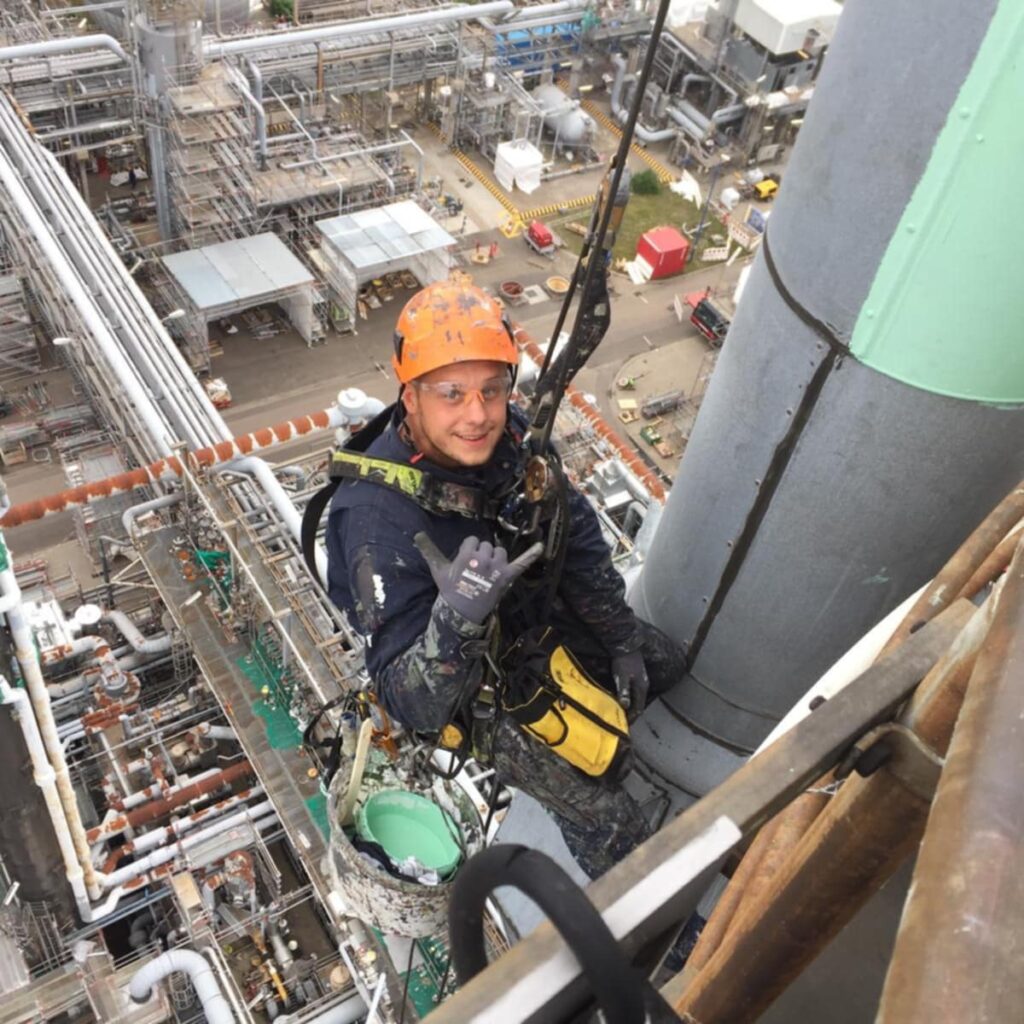
Piotr Lankiewicz
Specialist in height work and rope access techniques. Owner of a company providing services in the most inaccessible locations nationwide. He prioritizes punctuality, strict health and safety standards, and solutions that save time and costs where the use of heavy machinery is impractical or not cost-effective.