Cost Estimate for Chimney Substrate Preparation – How to Price Cleaning Work
Substrate preparation is a stage that is invisible once the project is finished, but it determines the adhesion and durability of the coating. The cost estimate should show not only the surface area of the chimney but also the way contamination and corrosion are removed.
When pricing chimney cleaning, the key question is: what scope of cleaning is needed before applying a coating on a specific chimney – steel or concrete. Substrate preparation is not a single line item. Removing corrosion from steel is done differently than removing loose layers and dirt from concrete, and differently still from removing deposits generated during plant operation. The decision on scope should be based on data gathered on site, not on a simplified price list, a single photo, or an assumption carried over from another project.
What to Identify Before Preparing a Cost Estimate
Before pricing the work, it is worth establishing what material is involved – steel or concrete, what type of coating was used previously, how badly it is flaking, whether the surface shows industrial deposits, soot, or greasy contamination, whether there are damp areas, and what access looks like to individual sections of the chimney. Each of these factors needs to be translated into specific questions asked during the site visit.
The contractor should clearly state which information is already certain, what cannot be assessed from photos alone, and which assumptions may change the scope of work only after entering the site. This approach means the client is not comparing seemingly similar offers that in reality cover completely different activities.
The type of substrate and the condition of the existing coating need to be considered together with water access and the possibility of hot water pressure washing – only combining this data shows whether the chosen method can be carried out within the available time and without shifting undocumented obligations onto the client.
Rope Tech carries out work on both steel and concrete chimneys, which is why identifying the substrate type must come before pricing. The cost estimate should reflect the full sequence of work: washing, drying, grinding or other mechanical cleaning, dust removal, and inspection. These arrangements are best recorded on a zone map or in a short protocol, so that the work crew and the person accepting the work use the same division of the structure.
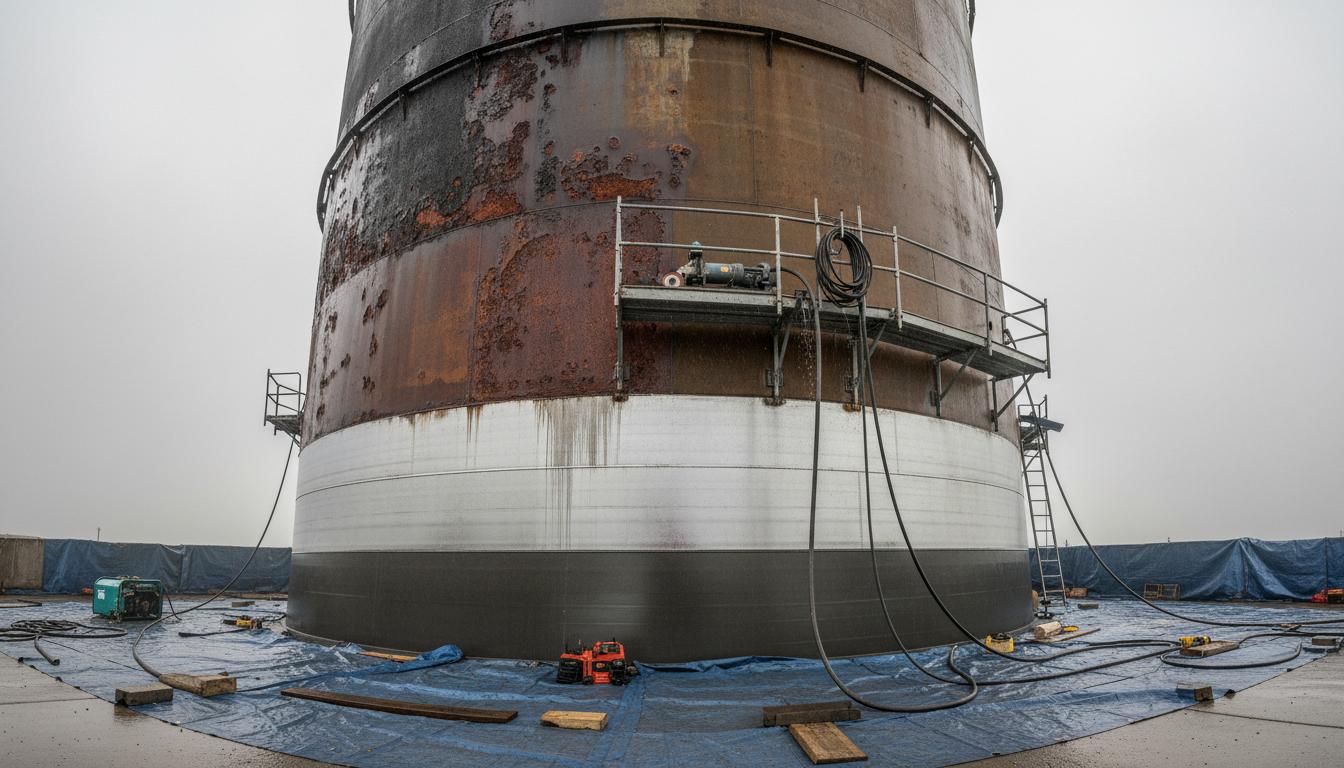
Mechanical Corrosion Removal on Steel Chimneys
This stage includes work with grinders and brushes, finishing edges and welds, dust control, and proper protection of tools used at height. Omitting this area from the cost estimate often means work stalls not because of the technology itself, but due to lack of access, an unprepared zone, or a conflict with ongoing plant operations. The schedule should account for preparation, the actual work, technological breaks, inspection, and the ability to safely withdraw the team.
The significance of this stage only becomes clear on a specific site. The distribution of corrosion, cracks, and delamination, as well as the amount of mechanical work needed on rings, galleries, and other details, affects the number of work stations, the method of protection, and the order in which individual zones are closed off.
Rope Tech removes corrosion spots on steel elements mechanically, among other methods with a grinder, within the agreed scope. If the investor requires a different method, it should be described separately and not presented as the company’s standard technology. When data cannot be confirmed from photos, it is more honest to mark that part of the scope as conditional than to enter a single value that will later require correction.
The mechanical steel cleaning stage naturally connects with the chimney painting and anti-corrosion service, which describes Rope Tech’s capabilities in this area. The details of a specific project still require a separate quote and terms established directly on site.
Hot Water Pressure Washing
At this stage, dirt, deposits, and part of the operational contamination are removed. It also matters how the surface is inspected and whether it has had time to dry before the coating is applied. The most common mistake is adopting a solution that looks good on paper but does not match the actual site conditions – the result can be additional mobilizations, longer shutdowns, or reduced quality of surface preparation.
In the cost estimate, it is not enough to simply state “pressure washing.” The offer should explain whether water access is available on site and whether hot water washing is possible, as well as how the surface will be inspected before painting begins. This kind of breakdown makes it easier to compare offers from different contractors and to distinguish the fixed scope from work that can only be confirmed once access is obtained.
Hot water pressure washing helps remove some deposits before further preparation, but it requires controlling water runoff and surface drying. The most reliable approach is a trial surface or detailed documentation of a few representative sectors. In practice, the decision on the washing scope should also account for the point at which it is safe to pause the stage, when weather, production, or surface condition make it impossible to continue.
Preparing Concrete Chimneys
On concrete structures, loose fragments and dirt need to be cleaned off, and cracks, losses, and the condition of the old coating need to be assessed – without attributing to Rope Tech tests that fall outside the company’s scope. It is worth asking the contractor to describe the method, the protective measures, the number of people involved, the access required, responsibility for preparing the site, and the acceptance criteria, and to record the answers in the offer or a protocol of arrangements. A simple assurance that the team will manage does not replace a concrete plan.
Predictability is the most important factor for this part of the cost estimate. It is provided above all by data on the amount of mechanical work needed on rings, galleries, and details, and on the type of substrate and the condition of the existing coating. Missing even one of these elements usually leads to additional mobilization, a schedule change, or a reduced scope once work has already started.
The typical system used by Rope Tech combines an epoxy primer with a polyurethane topcoat, unless the investor specifies a different specification. Establishing this in advance makes it possible to plan the work pace without assuming that the entire chimney is in the condition visible in a single photo. The quote becomes clearer once the actual work is separated from mobilization, protective measures, waiting for access, and work carried out by other parties.
Site Protection Costs
This part of the cost estimate covers, among other things, barriers, covers, protection of installations and vehicles, waste management, and protection against falling tools or fragments of the old coating.
Site protection should lead to a specific operational decision, not just a choice of technology name. It is necessary to establish how the surface will be inspected before painting begins, to verify the distribution of corrosion, cracks, delamination, and dirt, and to record who approves a change of scope if the conditions found on site differ from the assumptions.
Coatings can be applied by brush or by spray, though spraying only makes sense when the surroundings can be effectively protected. Underestimating the scope of protective measures leads to pressure to shorten the cleaning stage, which affects the durability of the result. It is best to plan the inspection before the prepared surface is covered or access is dismantled, because a later assessment tends to be limited to photographs alone.
How to Limit the Risk of Additional Work
Limiting risk relies on several elements: a site visit, exploratory openings agreed with the client, a scope reserve, clear preparation acceptance criteria, and a change-approval procedure.
Before approving this stage, it is worth checking the type of substrate and the condition of the existing coating, as well as water access and the possibility of hot water pressure washing. Both factors affect safety, working time, and the ability to sign off on the stage before changing position or restarting the plant.
A heat-resistant system is selected only when high operating temperatures are confirmed, and Rope Tech’s warranty on anti-corrosion work is two years. It is the quality of the substrate that has the key impact on the durability of the entire system, which is why it should not be an item hidden within the general painting price. The assumptions in the offer should indicate not only what will be done, but also the limits of responsibility and the procedure for approving additional work.
Information Needed to Prepare a Quote
A reliable quote is built on material that makes it possible to assess access, the scope of work, and organizational constraints on site. The most useful input is data gathered in a single message or form, supplemented with photos of the whole chimney and of the details in the worst condition. It is worth preparing:
- Chimney type and the split between steel and concrete surfaces.
- Photos of the entire structure, galleries, ladders, and representative damage.
- Information on the type of contamination, corrosion spots, and detached old coating.
- Data on the possibility of hot water washing and controlled discharge of contaminants.
- The system specified by the investor, operating temperatures, and the planned application method.
- Information on the zone at the base of the chimney, plant operations, weather, and the presence of other contractors.
If the degree of steel corrosion or the depth of concrete cracks cannot be assessed from photos alone, the cost estimate should explicitly state this as a conditional assumption, along with how additional cleaning after the site visit will be settled. This allows the client to compare offers based on the same scope of substrate preparation, instead of weighing amounts based on different guesses about surface condition.
Execution Process and Control Points
The cleaning plan should divide the work into stages that can be safely closed off – first washing and drying, then mechanical removal of corrosion or loose fragments, and finally substrate inspection. This order is not a matter of crew convenience, but a condition for preparation quality and for the ability to document the surface condition, which becomes invisible once the primer is applied.
- Divide the chimney into sectors and establish access and the hazard zone.
- Carry out hot water pressure washing, if the surface condition requires it.
- Remove corrosion spots and loose coating using a mechanical method.
- Inspect the substrate and identify areas that need work from another specialist.
- Apply the epoxy-polyurethane system by brush or spray, with appropriate covers in place.
- Document the sector, tidy up the zone, and move on to the next part of the structure.
The decision-maker on the client’s side should be available especially for the inspection of the cleaned substrate, before it is covered with primer – this is the only moment when preparation quality can be assessed with the naked eye. Any structural repairs to concrete or steel welds that go beyond cleaning itself are commissioned by Rope Tech to a trusted subcontractor, with the cost estimate stating directly which party is responsible for which part of the work.
Inspection and Documentation
Substrate inspection should follow the same division of the structure adopted in the cleaning cost estimate. Photos of details alone are not enough if they cannot be assigned to a specific zone, stage, and date – which is why it is worth photographing the surface before cleaning, immediately after it, and just before the primer is applied, while assessment is still possible.
- A sector map with photographic documentation before preparation and after the work is completed.
- No loose corrosion or coating within the agreed cleaning method.
- Compliance of the applied system with the specification indicated by the investor.
- Continuity of coverage on galleries, rings, edges, and other structural details.
- A clear division of responsibility between Rope Tech and coordinated subcontractors.
The cleaning protocol should separately list areas excluded from the preparation scope and sections where a method other than the standard one was used, for example due to dampness. This kind of record makes it easier to settle the cost estimate, use the coating warranty, and plan the next cleaning without having to reconstruct the substrate’s history from scratch.
Most Common Mistakes and Risks
The biggest problems in a chimney cleaning cost estimate usually stem from incomplete site assessment, not from the use of the wrong tool itself. It is worth describing the inspection of a cleaned sector separately, because once the primer has been applied, assessing the quality of the earlier stage becomes much harder. The risks below are worth discussing before the team is mobilized.
- Pricing the entire chimney based only on photos taken from ground level.
- Adopting a heat-resistant system without data on the actual operating temperature.
- Using spray application without the ability to effectively protect the surroundings.
- Treating painting as a substitute for welding or concrete structural repairs.
- No procedure for approving a larger scope revealed only after cleaning.
The risk of an underpriced cleaning cost estimate is limited above all by a site visit, appointing one person to coordinate substrate inspections, and precisely recording the boundaries of the mechanical corrosion removal scope. It is also important not to attribute to Rope Tech NDT testing, welding, or certifications the company does not hold – coordinating a subcontractor for structural repairs does not mean the cleaning team performs that work itself.
Summary
A sound decision on a chimney cleaning cost estimate combines technology, access, site organization, and the way work is inspected. The lowest price is not an advantage if it leaves out preparation, protective measures, or activities that only become apparent once work begins on site.
Before signing the contract, it is worth confirming the input data, the order of stages, who approves changes, and how completed work will be documented. Planning this way limits the risk of additional work and makes it possible to judge the outcome against agreed criteria, without having to fall back on marketing promises.
Author
Piotr Lankiewicz
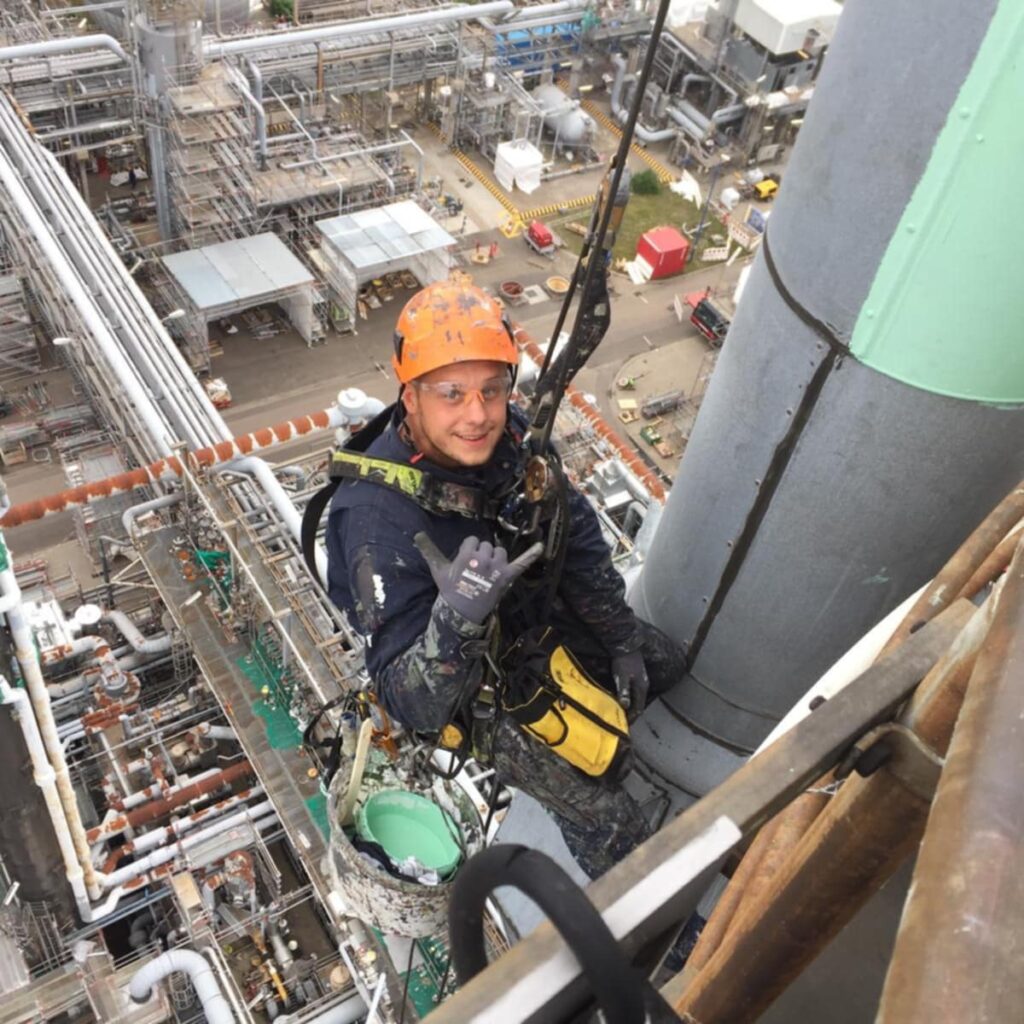
Specialist in height work and rope access techniques. Owner of a company providing services in the most inaccessible locations nationwide. He prioritizes punctuality, strict health and safety standards, and solutions that save time and costs where the use of heavy machinery is impractical or not cost-effective.